
Common Ground in Dialogue
A Blog Post by Sr Isabel Smyth, Secretary of the Bishops’ Committee for Interreligious Dialogue
Last week I was introduced to the work of Dr Peter Admirand who is the Director of the Centre for Interreligious Dialogue at Dublin City University. Dr Admirand was the keynote speaker at a colloquium on ‘Interreligious Dialogue in the Time of Pope Francis’, organised by the Scottish Bishops’ Committee for interreligious Dialogue.
While acknowledging the change and development in the Catholic church’s attitude to interreligious dialogue and the strong bond of friendship between the Pope and Rabbi Skorka, Dr Admirand widened our understanding of dialogue to include not just believers but also those who, as atheists, do not believe in God.
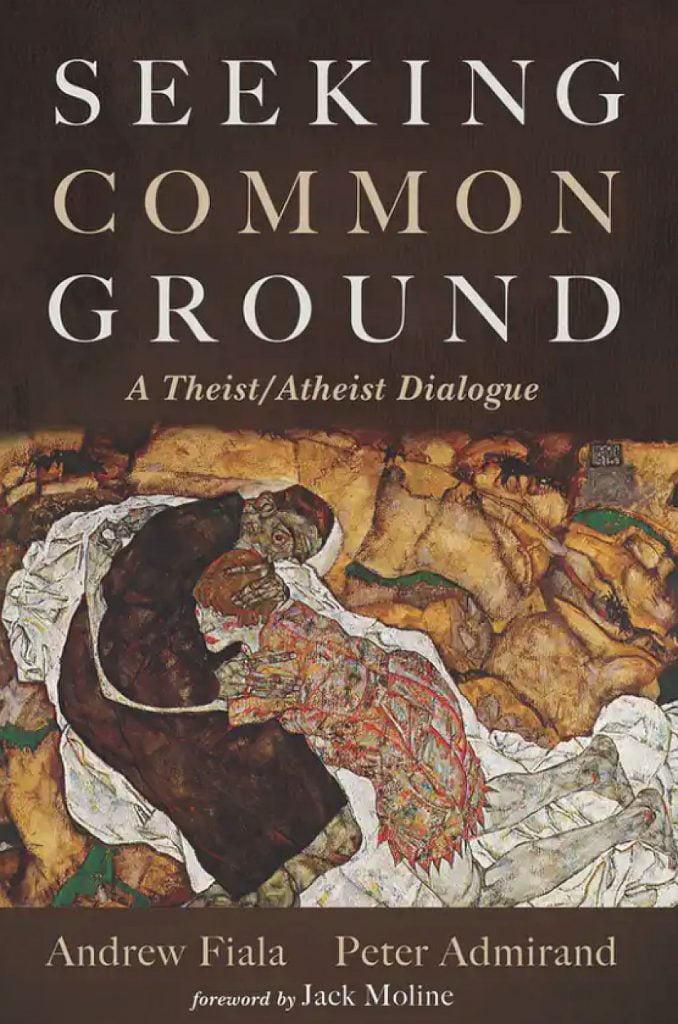
Dr Admirand’s most recent book is an account of such a dialogue, his own with Dr Andrew Fiala, the Professor of Philosophy and the Director of the Ethics Centre at California State University, someone who has an interest in religion but is a declared atheist. The dialogue contained in their book Seeking Common Ground: An Atheist-Theist Dialogue is refreshing in that, like so many of these kinds of dialogues, it is not polemical with one side or the other trying to prove or disprove the existence of God. Rather it focuses on the common ground of a set of virtues which allows for an honest conversation and a common search for understanding without suspicion and resentment.
Having learned something of the faith journey of each of the writers, the rest of the chapters focus on a virtue, suggested by one of the writers and then responded to by the other. There are seven virtues in all – harmony, courage, humility, curiosity, honesty, compassion and honour. While the writers explore each virtue from their own perspective there is a learning for all of us in considering their role in interfaith relations. Some, it would seem to me, refer to the attitudes necessary for dialogue – a desire for harmony so that we are willing to set aside, at least for the time of dialogue, judgements and prejudices; a humility in listening to the truth as another sees it while recognising and acknowledging the terrible consequences of the failings of religions and ideologies; a compassion that recognises our shared humanity in its seeking for truth, even if we come up with different answers; an honour that respects and values the integrity of the other and an honesty that allows us to see how others might interpret and understand our words and actions. Recently Pope Francis, a great advocate of dialogue, found himself challenged when he suggested that the Torah does not offer fulfilment but is in fact a journey that leads to an encounter with Christ, seemingly undoing advances in Catholic – Jewish relations from the days when Christianity was thought to supersede Judaism and render it irrelevant. Now the Vatican is having to clarify that the Pope was speaking within the context of Christian scripture and stating “the abiding Christian conviction is that Jesus Christ is the new way of salvation. However, this does not mean that the Torah is diminished or no longer recognized as the ‘way of salvation for Jews.”
When such a thing happens to a Pope it is newsworthy, but such misunderstandings can happen in dialogue to all of us though if the dialogue is based on friendship, as is the case with the Pope’s relationship with the Jewish community, the upset can be talked about openly and be a moment of learning for everyone. But it is fear of such incidents that can keep some people from engaging in dialogue. Courage is then needed to break out of our sense of self-sufficiency and comfort and enter the world of another. For those of us who have done it, the journey is transformative and enriching but taking the first step can be difficult. Perhaps it is at that point that curiosity is something to be valued as a motivation for setting out on what is truly an adventure.
At our colloquium Dr Admirand highlighted curiosity as the value he hesitated over and some attending the event agreed with him. He noted that the Catholic tradition, based as it is on the certainty of Revelation, was suspicious of curiosity believing that it could undermine religious belief and, in their book, Dr Fiala states his belief that progression in science, psychology and other disciplines has done just that, especially since the Enlightenment. It certainly has taken many people beyond what Fiala calls naïve religion and that surely must be a good thing. There is of course a dangerous curiosity and today we are aware of the dangers of the internet, experimentation with drugs and other substances for example that can lead young people to play with fire – metaphorically if not literally. Pope Francis has warned against idle curiosity that is empty and superficial, but he has also said “the secret to joy: never suppress positive curiosity; get involved, because life is meant to be lived”.
Within the context of interreligious dialogue curiosity is surely a value which, if strong enough, gives us the courage to enter into the world of others and come back to our own changed and enlightened not just about the other but also about ourselves, our beliefs and the world we inhabit.
Common Ground in Dialogue Read More »



 Fr Victor Edwin is a Jesuit priest who teaches Christian-Muslim Relations at Vidyajyoti, a Catholic centre for higher theological learning in Delhi. He is deeply engaged in seeking to promote understanding and goodwill between Christians and Muslims. He has a PhD in Islamic Studies from Jamia Millia Islamia, New Delhi, and has written widely on issues related to interfaith relations.

 Guest blog – Cardinal Michael Czerny reflects on the significance of the first International Day of Human Fraternity marked on Thursday, in this reflection which is reposted from
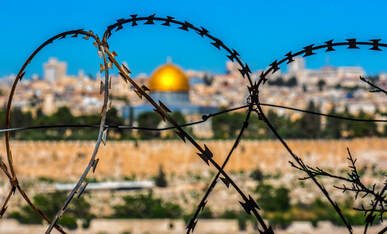
 It is impossible to conceive of any religion that doesn’t include some concept of pilgrimage. Islam makes it one of the Five Pillars to its religion – the Hajj. Every adult Muslim is expected to make this journey at some point in their life, even if only by great difficulty. The Holy site of Mecca is itself rather illusive, despite being at the centre of this rite. It’s Ka’bah is popularly considered to have been built by Adam, and to have been re-built by Abraham. These legendary associations transform this figurative “House of God” into a focal-point for all Humanity, in the first instance, and then into an Abrahamic shrine. Pilgrimage to Mecca thereby accomplishes, for Muslims, a return to their source (Allah) and to the foundation of His relationship with Humanity. They fulfil religious obligation in making a journey of prayer to this site, and return home uplifted. For Jews and Christians both, Jerusalem is the central space by contrast (Muslims make a secondary pilgrimage there nonetheless). By Biblical narrative, this city was the site upon which God blessed Abraham – through Melchizedek, its King – and upon which His Chosen Nation was founded centuries later. In the New Testament, it was the city in which Jesus Christ was to be suffer His Passion, Death, Resurrection and Ascension. It was also the city in which Pentecost was to come, and from which the Gospel would leave to reach the ends of the earth. So that, in making pilgrimage to Jerusalem, there are again the two key notions of returning to a Divine source and leaving rejuvenated by that source, to bring its joy to others.
 In the tradition of Hinduism, the ancient city of Varanasi holds especial significance for pilgrimage. Within its boundaries is the sacred river Ganges, which is of great importance to most Hindus, as a river in which they might wash away their sins. The city itself was reputedly founded by Shiva, who beheaded his rival Brahma. Brahma’s head was lost by Shiva, and fell into the ground, therefore making the land encompassed by Varanasi absolutely sacred in Hindu belief. Varanasi is crucial also to many Buddhists – the Gautama Buddha having given his first sermons not far from the centre of the city, at Sarnath. For Sikhs, there is the city of Amritsar, which hosts the Golden Temple. The city’s name translates as “Pool of the Nectar of Immortality” – returning us to the theme of a space’s power to transform us from within – and it was founded alongside the temple by Guru Arjan.